
ONLINE STORES / AXO-8
Online store development.
Built around your business.
From choosing a product to a confirmed order. We build around your catalogue, customers and operations, and define how payments, delivery, stock and data fit together.
New store · redesign · migration · agreed integrations
CHECKOUT AND DAILY OPERATIONS
What does your store need to support?
Before quoting, we define the requirements and dependencies. Each integration belongs to an agreed scope; we select technology that can support it reliably.
Catalogue and product selection
Categories, search, filters, variants, photography and information before purchase. We define how price, availability and product details vary between options.
Cart and checkout
A clear cost breakdown, customer details, delivery selection and payment. We check successful orders, declined payments, repeated clicks and order confirmation handling.
Stock and data migration
We identify the source of product data, SKUs, stock and update rules. Before migrating, we check a sample import, missing fields and duplicate records.
Connections to your operations
As agreed, we connect the store to order management, CRM, accounting or delivery providers. We check available access and the capabilities of each source.
Search foundations during redesign
We review existing URLs and important pages. We prepare agreed redirects, titles, canonical links, a sitemap and appropriate product information.
Measurement and handover
We distinguish product views, cart additions, checkout starts and confirmed orders. We agree management access, instructions and care after launch.
IF YOU ALREADY HAVE A STORE
A redesign starts with what already exists.
What to preserve
We identify what works: selling products, content, search URLs and existing integrations. We define which data is worth migrating and can lawfully be used.
What to check before switching
In a separate environment, we check sample products, variants, stock, orders and payments. We define the switch, responsibilities and a recovery path if something fails.
When a new store is unnecessary
If the problem is the offer, traffic, delivery or a broken payment flow, fixing the current store may be more useful. Scope should follow the problem and expected benefit.
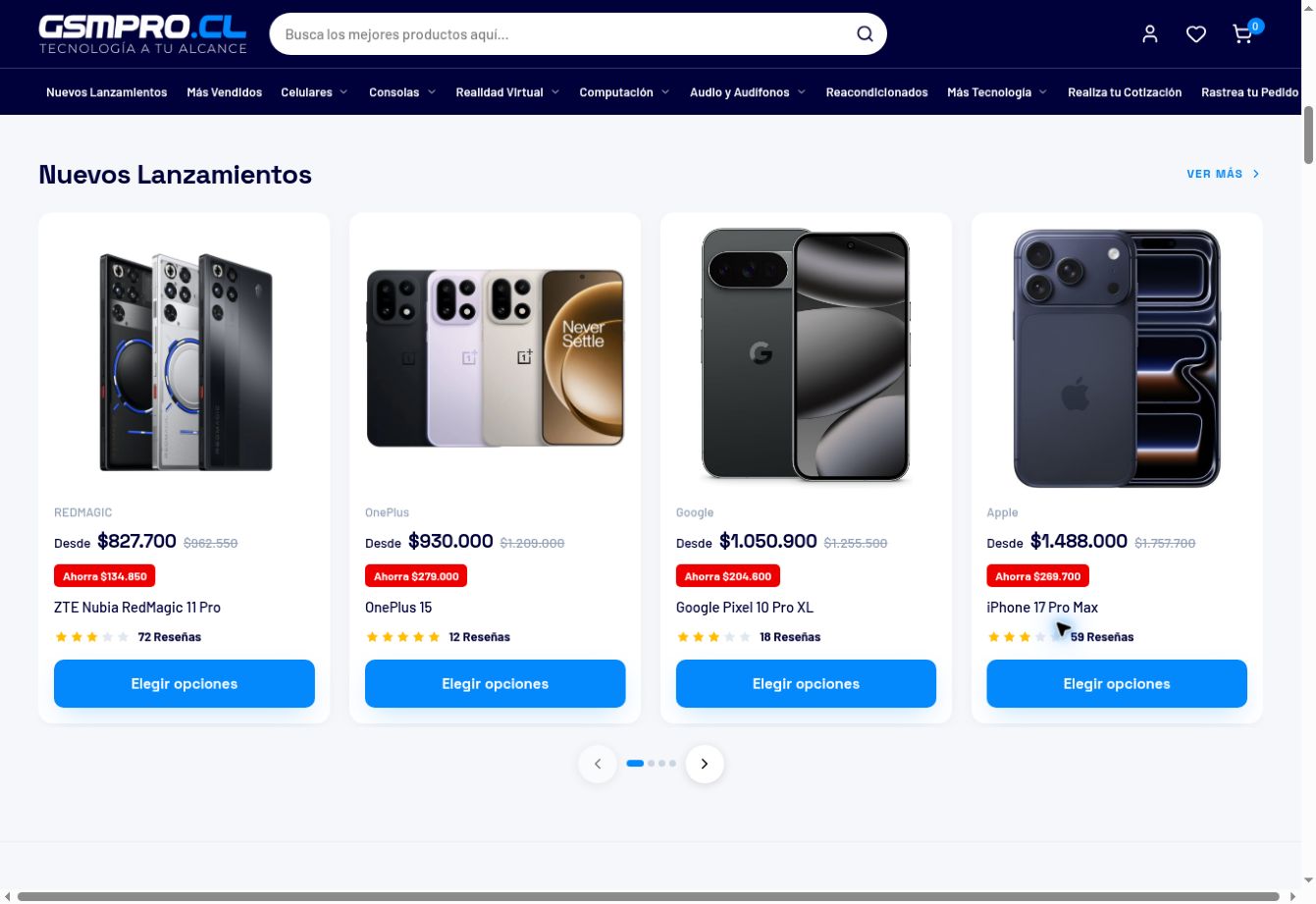
DEVELOPMENT EXAMPLE / GSMPRO
A replacement sales platform.
For GSMPRO, we developed a replacement e-commerce platform and addressed the requirements for restoring the sales journey. The work covered checkout, technical dependencies and payment-provider integration requirements.
We show a development preview and the scope of completed work. This page makes no measured sales-growth claim and does not claim that GSMPRO uses the optional data system described below.
OPTIONAL DATA SYSTEM
What should you sell next? Use the numbers.
We can connect store data with advertising, sales, costs and stock. The system helps assess which product to keep, pause or test. This is a separate, agreed scope.
Sources and freshness
Advertising spend, attributed orders, purchase costs, agreed expenses and stock. The last successful refresh and gaps in sales attribution remain visible.
Contribution after costs
We assess the amount left after agreed costs and advertising. High revenue without cost visibility is insufficient for deciding where to spend next.
Recommendation or authorised action
Your team approves a recommendation. Where agreed, the system can change a featured product or a supported campaign setting within an approved catalogue and limits.
Checks and stopping rules
We define a minimum sample, test period and spending limit. Stale or missing data holds execution. Changes are logged and can be reversed.
BEFORE WE START
Questions about delivery.
How much does online store development cost?
We quote around catalogue size, product variants, checkout, data migration and integrations. The proposal separates implementation from provider charges, hosting and ongoing care. We do not publish one starting price for every store.
Can you redesign an existing online store?
Yes. We first review the store, access and dependencies. We then recommend a targeted fix, redesign or migration. Data transfer and redirects are defined before work starts.
Can you migrate products, variants and stock?
We agree which data to move and from which source. Before the full transfer, we check a sample, SKUs, variants, missing values and duplicates. Data availability also depends on access to the current system.
Are payments, shipping and accounting included?
The connections listed in the approved proposal are included. We check provider support and access before implementation. Provider contracts, account approvals and third-party charges are separate from development.
How soon can a store launch?
We set the timeline after reviewing requirements, data and access. Before launch, we check the agreed purchase journey and prepare the switch. We do not promise a date before the key dependencies are understood.
Can the system select and change products automatically?
Yes, where separately agreed and supported by available data and integrations. We can start with recommendations for approval. Automatic execution needs an approved catalogue, rules, spending limits, data-freshness checks and a way to stop it.
What do you need for the first conversation?
A link to your current store if you have one, an approximate catalogue size and the main problem. You do not need to send passwords or prepare a long specification before the meeting.
NEXT STEP
Let’s look at your store.
Tell us whether you need a new store, a redesign or better visibility into the numbers. We define a sensible scope and what needs checking before a proposal.